Your Active Guide to Managing Joint Pain
Arthritis impacts millions of Australians, often making simple everyday movements challenging and painful. It would be the most common condition that brings patients to our clinic! While living with joint pain can feel isolating and limiting, the good news is you have significant power in managing your symptoms and improving your quality of life. As a physio, I understand why people may avoid exercise or activity due to pain, however by embracing active, evidence-based strategies, you can make a profound difference in your joint health and overall well-being.
What is Arthritis?
Osteoarthritis (OA), often called “wear-and-tear” arthritis, is a degenerative joint disease where the cartilage cushioning your joints gradually breaks down over time and can lead to bone on bone friction (Arthritis Australia, n.d.; Mayo Clinic, n.d.). OA predominately affects weight bearing joints such as the spine, knees, hips and hands and common symptoms include joint pain, stiffness, swelling, and reduced movement.
Active Strategies for Managing Arthritis
Managing arthritis involves a multi-faceted approach, empowering you to live more comfortably and actively.
1. Movement is Medicine: The Power of Exercise
As a physiotherapist, I have found the most effective way to manage arthritic pain is through regular, appropriate exercise. This is also very much supported by the evidence. Exercise lubricates your joints, strengthens surrounding muscles, improves flexibility, and can significantly reduce pain and stiffness (Arthritis Foundation, n.d.; Nelson et al., 2014). For arthritic pain specifically, I would recommend low-impact activities like walking, swimming, or cycling, 3-5 times per week. If you are new to exercise, start with 5–10-minute short bursts of exercise, gradually building up to 30 minutes at a moderate intensity. Always listen to your body and modify accordingly (Mayo Clinic, n.d.). Adding in strength training 2-3 times per week on non-consecutive days has also been found to reduce arthritic pain, as well incorporating stretching/flexibility for the surrounding muscles/joints.
2. Smart Living: Activity Modification & Pacing
Learning to live smarter with your joints helps prevent flare-ups and preserves joint function. Pace yourself by breaking down tasks, taking frequent breaks, and balancing activity with rest (Hunter & Bierma-Zeinstra, 2019). Learn joint protection techniques to minimise stress during daily tasks and consider using assistive braces and devices to reduce stress through the affected joint.
3. Lightening the Load: Weight Management
As a health professional, I’ve seen firsthand the incredible difference managing your weight can make, especially for those highly-used joints like your knees, hips, and feet. It’s quite remarkable: every kilogram of extra weight can put several kilograms of added stress on your knee joints when you’re just walking around (Messier et al., 2005). This is why, even if you lose just a small percentage of your body weight, it can significantly reduce your pain and even help slow down the progression of your osteoarthritis (Christensen et al., 2007; Messier et al., 2005). I always encourage my patients to focus on a balanced diet combined with their personalised exercise plan to achieve this.
4. The Role of Quality Support: Integrating Braces & Supports
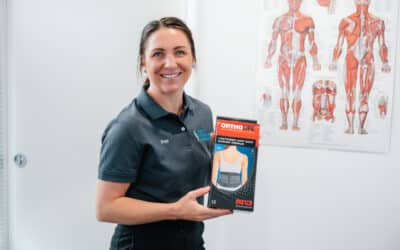
I often recommend that my patients consider external supports like braces or sleeves. These aren’t just bandages; they can provide crucial comfort and assistance as a key part of your active management plan. What they do is offer external stability, gently limiting those painful movements and protecting your joint from undue stress (Chew & Lim, 2018). The right amount of compression can also work wonders to reduce swelling and ease your pain. Most importantly, I’ve seen how a well-fitted support can give you a real reassuring sense of security, empowering you to move with so much more confidence (Brosseau et al., 2017).
Beyond the Basics: A Holistic Approach
As a physio, I truly believe in empowering people to take an active role in managing their pain. It’s crucial that you take responsibility and actively engage in your own pain management journey. Beyond exercise and load management you also need to prioritise good sleep, find effective ways to manage your stress, and keep yourself well hydrated. By actively engaging in managing your arthritis, I’ve seen countless patients gain so much more control over their symptoms, maintain their independence, and truly enjoy a more fulfilling and active life.
Ready to equip yourself for better joint health? Explore our range of physiotherapy-endorsed supports and braces, designed to complement your active arthritis management plan.
References
- Arthritis Australia. (n.d.). Osteoarthritis. Retrieved July 13, 2025, from https://arthritisaustralia.com.au/types-of-arthritis/osteoarthritis/
- Arthritis Foundation. (n.d.). Exercise and Arthritis. Retrieved July 13, 2025, from https://www.arthritis.org/health-wellness/healthy-living/physical-activity/getting-started/exercise-and-arthritis
- Brosseau, L., Taki, J., & March, L. (2017). The immediate effect of a soft knee brace on pain, activity limitations, self-reported knee instability, and self-reported knee confidence in patients with knee osteoarthritis. Journal of Clinical Medicine, 6(12), 110. https://doi.org/10.3390/jcm6120110
- Chew, K. T., & Lim, W. W. (2018). Role of knee braces in the management of osteoarthritis: A systematic review. Singapore Medical Journal, 59(3), 118–125. https://doi.org/10.11622/smedj.2018029
- Christensen, R., Bartels, E. M., & Astrup, A. (2007). Effect of weight reduction in obese patients with knee osteoarthritis: a systematic review and meta-analysis. Annals of the Rheumatic Diseases, 66(4), 433–439. https://doi.org/10.1136/ard.2006.065121
- Hunter, D. J., & Bierma-Zeinstra, S. (2019). Osteoarthritis. The Lancet, 393(10170), 2217–2229. https://doi.org/10.1016/S0140-6736(19)30063-9
- Mayo Clinic. (n.d.). Osteoarthritis. Retrieved July 13, 2025, from https://www.mayoclinic.org/diseases-conditions/osteoarthritis/symptoms-causes/syc-20351925
- Messier, S. P., Mihalko, S. L., Legault, L., Hackney, E. T., Hanna, R., DeVita, P., … & Kohrt, W. M. (2005). Effects of high-strength vs. high-endurance resistance training on properties of the quadriceps and hamstring muscles, functional capabilities, and quality of life in older adults with knee osteoarthritis. Arthritis & Rheumatism, 53(5), 682–692. https://doi.org/10.1002/art.21443
- Nelson, A. E., Allen, K. D., Golightly, Y. M., Goode, A. P., & Katz, J. N. (2014). A systematic review of physical activity, sedentary behavior, and incident osteoarthritis. Osteoarthritis and Cartilage, 22(1), 16–27. https://doi.org/10.1016/j.joca.2013.11.001