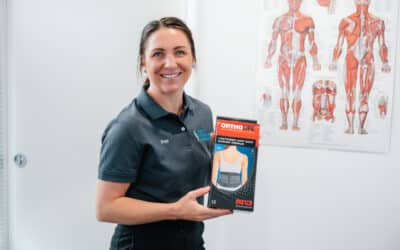
Think of acute pain as your body’s trusty alarm system. It’s a sudden, sharp, and typically short-lived sensation that immediately follows an injury, illness, or medical procedure.
- Purpose: Its primary role is protective. It signals to your brain that something is wrong, prompting you to withdraw from danger, rest an injured area, or seek medical attention.
- Characteristics: Acute pain is usually localised, clearly linked to a specific event or cause, and tends to decrease as the underlying injury or condition heals. For example, the sharp pain after spraining an ankle, the ache from a pulled muscle, or the discomfort after surgery are all forms of acute pain.
- Management: Management often focuses on treating the underlying cause, protecting the injured area, and allowing for natural healing. This might involve rest, ice, compression, elevation (RICE), and seeking professional assessment from a doctor or physiotherapist.
Chronic pain is far more complex. Unlike acute pain, it’s persistent and lasts for an extended period, typically beyond the normal healing time – often defined as more than three to six months (Turk & Okifuji, 2002). In chronic pain, the pain signal can become the problem itself, even if the initial injury has healed.
- Purpose: It often loses its protective, warning function and can become a debilitating condition on its own. The nervous system can become sensitised, meaning it continues to send pain signals even without ongoing tissue damage (Loeser & Treede, 2008).
- Characteristics: Chronic pain can be constant or intermittent, dull or sharp, aching or burning. It might spread beyond the original injury site. Living with chronic pain can significantly impact every aspect of life, affecting sleep, mood, energy levels, work, relationships, and the ability to participate in activities you once enjoyed. Conditions like persistent back pain, widespread arthritis pain, fibromyalgia, or nerve pain are often chronic.
- Management: Managing chronic pain requires a more holistic and often multidisciplinary approach. It shifts from simply “curing” an injury to learning to live well despite the pain, improving function, and reducing its impact on your life.
Regardless of whether you’re experiencing acute or chronic pain, understanding its nature is the first step towards better management. Here are some general strategies that can help:
- Listen to Your Body (Wisely): For acute pain, rest and protection are key. For chronic pain, it’s about finding the balance between activity and rest. Learning to differentiate between discomfort that indicates harm and “safe” discomfort from building strength or movement is vital.
- Stay Active (Appropriately): While rest is crucial for acute injuries, prolonged inactivity can worsen chronic pain. Graded exercise, guided by a physiotherapist, helps to strengthen muscles, improve flexibility, and increase your tolerance for activity. Gentle movement, even short walks, can be incredibly beneficial.
- Embrace the Mind-Body Connection: Stress, anxiety, and depression can significantly amplify pain. Techniques like mindfulness, meditation, deep breathing exercises, and adequate sleep can help calm your nervous system and reduce pain perception.
- Seek Professional Guidance: Your GP can help with diagnosis and medication. A physiotherapist is invaluable for both acute injury rehabilitation and developing strategies for chronic pain, focusing on movement, strength, and function. Other specialists, like pain psychologists, can also play a crucial role.
- Utilise Supportive Tools: For both acute protection and ongoing comfort, appropriate braces or supports can provide external stability, reduce strain, manage swelling, and offer proprioceptive feedback, aiding in pain reduction and building confidence in movement.
By recognising the type of pain you’re experiencing and employing informed strategies, you can take significant steps towards managing your symptoms, improving your function, and living a fuller, more comfortable life.
Ready to explore supportive tools that can aid your journey to comfort and better health? Explore our range of physiotherapy-endorsed supports and braces today.
- Engel, G. L. (1977). The need for a new medical model: A challenge for biomedicine. Science, 196(4286), 129–136. https://doi.org/10.1126/science.847460
- International Association for the Study of Pain (IASP). (n.d.). IASP Terminology. Retrieved July 13, 2025, from https://www.iasp-pain.org/resources/terminology/ (or refer to their official definitions published elsewhere).
- Latremoliere, A., & Woolf, C. J. (2009). Central sensitization: a generator of pain hypersensitivity by central neural plasticity. Journal of Pain, 10(9), 895–926. https://doi.org/10.1016/j.jpain.2009.06.001
- Loeser, J. D., & Treede, R. D. (2008). The Kyoto protocol of IASP Basic Pain Terminology. Pain, 137(3), 473–477. https://doi.org/10.1016/j.pain.2008.02.007
- Moseley, G. L., & Butler, D. S. (2017). Explain Pain Supercharged. NOI Group.
- Ossipov, M. H., Dussor, G. O., & Porreca, F. (2010). Central modulation of pain. Journal of Clinical Investigation, 120(11), 3749–3759. https://doi.org/10.1172/JCI43766
- Turk, D. C., & Okifuji, E. A. (2002). Psychological factors in chronic pain: evolution and revolution. Journal of Consulting and Clinical Psychology, 70(3), 678–690. https://doi.org/10.1037/0022-006X.70.3.678
- Woolf, C. J. (2011). Central sensitization: Implications for the diagnosis and treatment of pain. Pain, 152(3 Suppl), S2–S15. https://doi.org/10.1016/j.pain.2010.09.030
- Woolf, C. J., & Salter, M. W. (2000). Neuronal plasticity: increasing the gain in pain. Science, 288(5472), 1765–1769. https://doi.org/10.1126/science.288.5472.1765