The ankle is a complex joint, constantly working to support our body weight and enable movement. Most ankle injuries involve the ligaments, which are strong bands of tissue connecting bones to other bones. The most common ankle injury is a sprain, occurring when these ligaments are stretched or torn.
Ankle sprains typically happen when your foot twists, rolls, or turns beyond its normal range of motion. Symptoms can range from mild tenderness and swelling to severe pain, bruising, and difficulty bearing weight. Regardless of the severity, giving your ankle the proper support during healing is key to a robust recovery and preventing future issues.
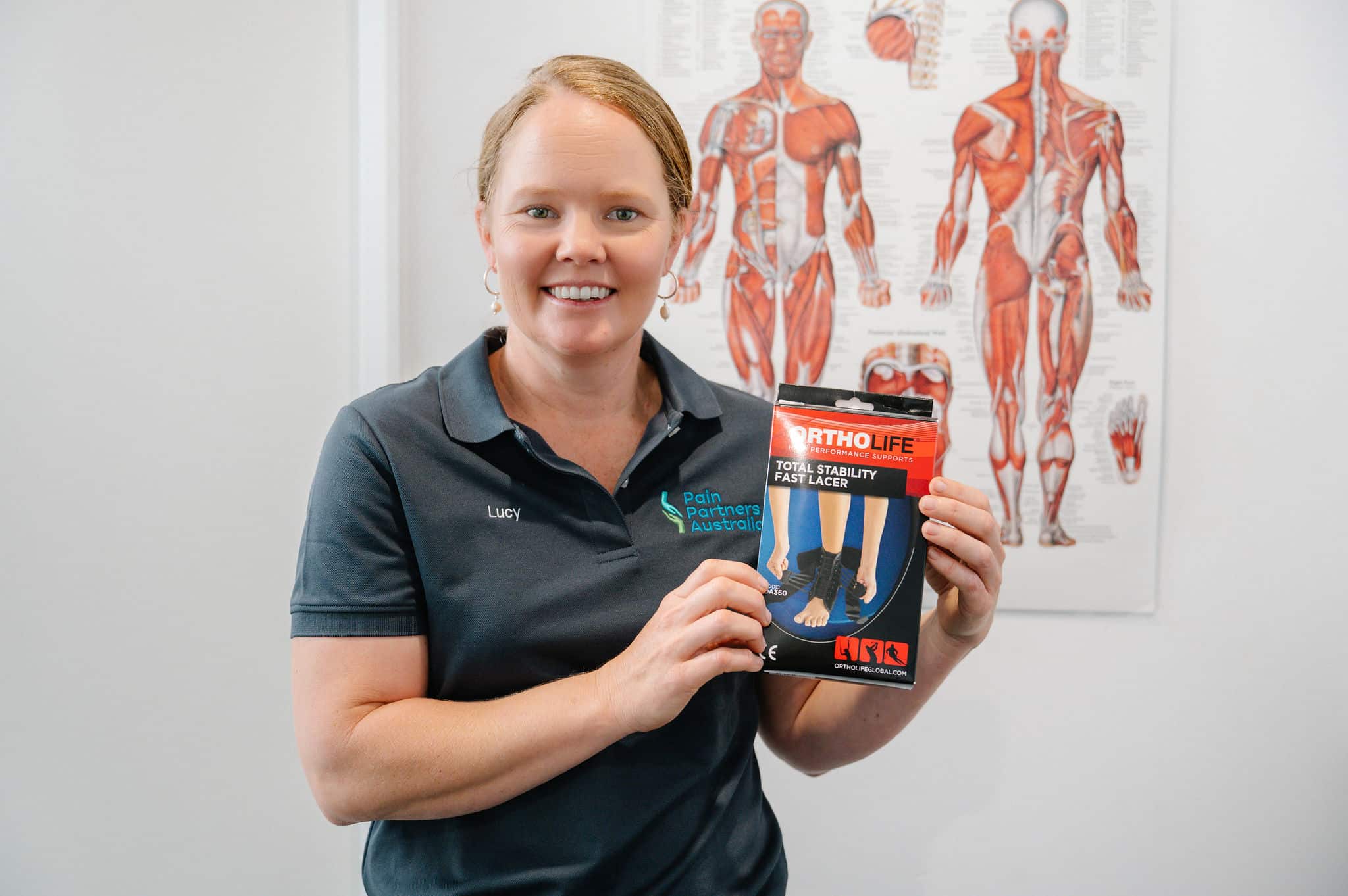
Our range of physiotherapy-endorsed ankle supports offers targeted assistance, complementing your recovery and boosting your confidence. Beyond simple compression, these braces provide specific benefits to aid healing and protection:
- Optimal Stability and Support: Ankle braces provide crucial external stability, limiting excessive side-to-side movement that stresses healing ligaments. This protective shield allows damaged tissues to rest and repair, vital during initial recovery and return to activity.
- Pain Reduction: By stabilising the joint and preventing painful movements, a well-fitted support significantly reduces discomfort. Gentle compression also helps soothe aches.
- Swelling Management: Compression elements in our supports effectively manage swelling, aiding pain relief and supporting the healing process by improving circulation.
- Protection During Healing: Braces offer a physical layer of protection, guarding against accidental knocks or awkward movements that could re-injure delicate tissues.
- Enhanced Confidence in Movement: Overcoming the fear of re-injury is key. An ankle support provides a reassuring feeling of security, empowering you to gradually increase activity with confidence.
- Injury Prevention: For those prone to re-sprains or returning to sports, ongoing ankle support is a vital tool. It provides proprioceptive feedback (your body’s sense of joint position) and limits harmful movements to prevent future injuries.
Not all ankle supports are created equal. Our range is carefully selected and endorsed by physiotherapists because they meet stringent criteria for effective support, anatomical fit, and durability. This means you’re choosing a product that aligns with professional rehabilitation principles, designed to truly aid your recovery journey and help you maintain an active lifestyle.
Don’t let an ankle injury keep you on the sidelines. Providing your ankle with the right support can make a significant difference in your recovery, pain management, and confidence to get back to the activities you love.
Ready to give your ankle the support it needs to heal and thrive? Explore our range of physiotherapy-endorsed ankle supports today and step towards a stronger, more confident recovery.
- Doherty, C., Bleakley, C., Holden, S., Massey, A., Delahunt, E., & Kenny, I. C. (2014). The effect of bracing and taping on ankle kinematics and kinetics during single leg landing: A systematic review. Journal of Foot and Ankle Research, 7(1), 16. https://jfootankleres.biomedcentral.com/articles/10.1186/1757-1146-7-16
- Hertel, J., & Denegar, C. R. (2010). An evidence-based approach to bracing and taping for preventing and treating ankle sprains. Journal of Athletic Training, 45(6), 614–623. https://doi.org/10.4085/1062-6050-45.6.01
- Mayo Clinic. (n.d.). Ankle Sprain. Retrieved June 1, 2025, from https://www.mayoclinic.org/diseases-conditions/ankle-sprain/symptoms-causes/syc-20353225
- Osborne, M. D., & Rizzo, T. D. (2003). Prevention and Treatment of Ankle Sprain in Athletes. Sports Medicine, 33(15), 1145–1158. https://doi.org/10.2165/00007256-200333150-00003
- Wolfe, C. J., & Ross, S. E. (2020). Ankle Sprains: The RICE (Rest, Ice, Compression, Elevation) Protocol. Orthopaedic Surgery, 12(6), 1604–1608. https://doi.org/10.1111/os.12818