Your knee joint is stabilised by four major ligaments, each playing a crucial role in controlling movement and preventing excessive stress:
- Anterior Cruciate Ligament (ACL): Located in the centre of the knee, it controls rotation and forward movement of the shin bone. ACL tears are often associated with sudden stops, changes in direction, or awkward landings.
- Posterior Cruciate Ligament (PCL): Also in the centre, it controls backward movement of the shin bone. PCL injuries typically result from a direct blow to the front of the knee.
- Medial Collateral Ligament (MCL): Located on the inside of the knee, it prevents the knee from bending inward. MCL injuries often occur from a direct blow to the outside of the knee.
- Lateral Collateral Ligament (LCL): Located on the outside of the knee, it prevents the knee from bending outward. LCL injuries are less common and usually result from a blow to the inside of the knee.
Symptoms of a knee ligament injury often include a popping sound at the time of injury, immediate pain, swelling, tenderness, and a feeling of instability or the knee “giving way.”
Our physiotherapy-endorsed knee braces offer targeted support that aids your recovery from a ligament injury. Beyond simple compression, they provide vital benefits for healing and regaining confidence:
- Crucial Stability and Support: Braces provide external stability, limiting excessive movements that could re-stress the injured ligament. This acts as an external support system, mimicking the damaged ligament’s function and protecting it during healing and activity.
- Protection for Healing Ligaments: Whether recovering from surgery or managing conservatively, a brace creates a protective environment, shielding the healing ligament from accidental twists, impacts, or movements that could hinder recovery or lead to re-injury.
- Pain Management: By stabilising the knee and preventing irritating movements, a well-fitted brace significantly reduces discomfort. Its firm, comfortable support also helps manage swelling, further easing pain.
- Enhanced Confidence in Movement: For those experiencing instability or a “giving way” sensation, a supportive brace provides a reassuring sense of security. This empowers you to move with greater confidence as you gradually return to daily activities and rehabilitation.
- Proprioceptive Feedback: Braces offer continuous sensory input about your knee’s position. This enhanced proprioception (body awareness) improves neuromuscular control, helping you move more safely and precisely, protecting your knee further.
Ready to find the critical support your knee needs for recovery? Explore our range of physiotherapy-endorsed knee braces today and take a significant step towards a stronger, more stable knee.
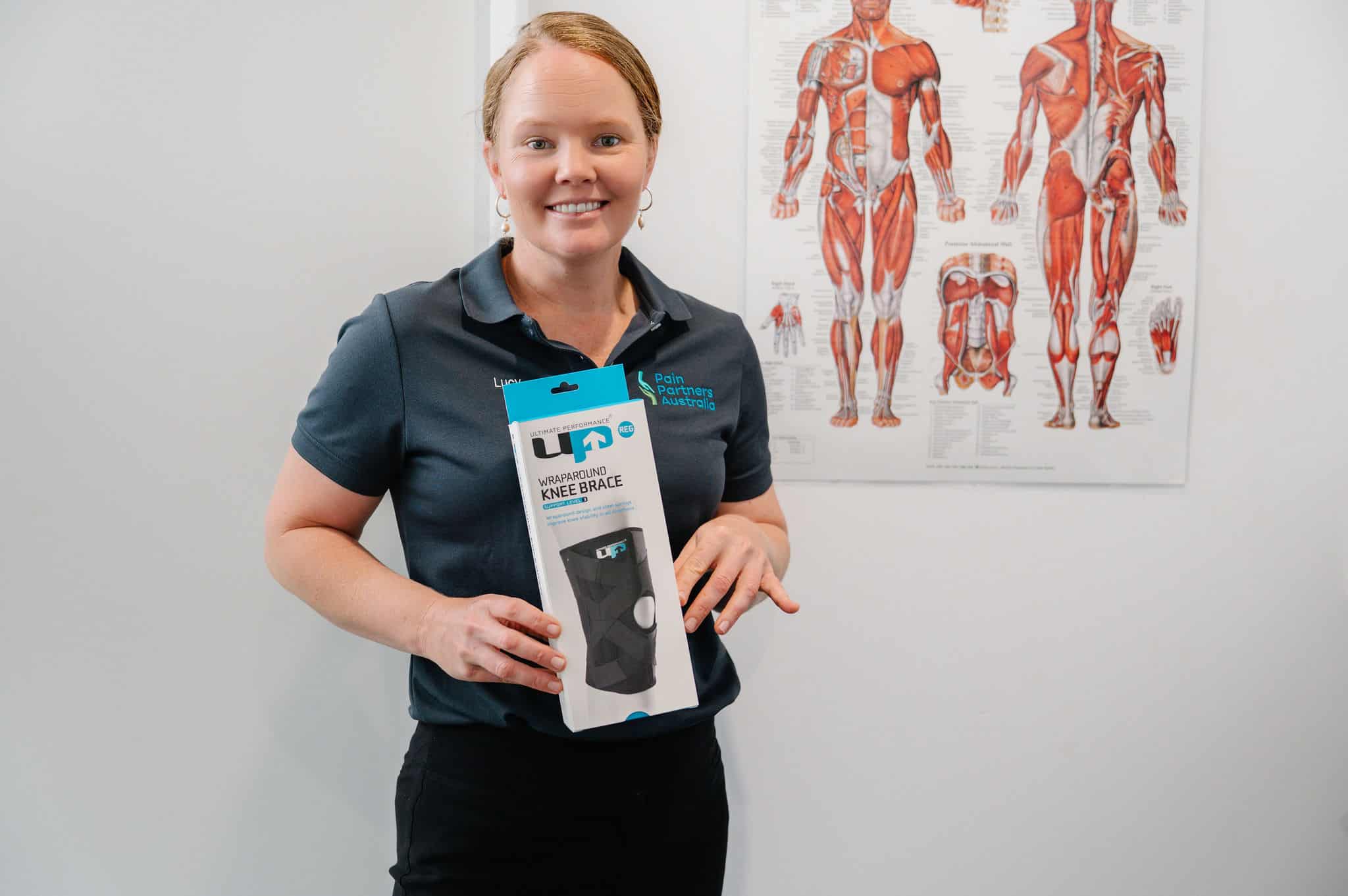
Ultimate Performance Wraparound Knee Brace – $89
- American Academy of Orthopaedic Surgeons (AAOS). (n.d.). ACL Injury: Diagnosis and Treatment. Retrieved June 8, 2025, from https://orthoinfo.aaos.org/en/diseases–conditions/acl-injury-diagnosis-and-treatment/
- Birmingham, T. B., Bryant, D. M., Giffin, J. R., Jenkyn, T. R., & Chesworth, B. M. (2011). A systematic review of the effectiveness of functional knee bracing after anterior cruciate ligament reconstruction. Clinical Journal of Sport Medicine, 21(1), 10–20. https://doi.org/10.1097/JSM.0b013e3181f7d730
- Getgood, A., & Bryant, D. (2020). The role of bracing in the management of knee injuries: A systematic review. Clinical Journal of Sport Medicine, 30(6), 551–562. https://doi.org/10.1097/JSM.0000000000000788
- Klooster, T. M., & Zijlstra, A. G. (2018). The effect of knee bracing on gait and balance in older adults with knee osteoarthritis: A systematic review. Journal of Sport and Health Science, 7(2), 163–170. https://doi.org/10.1016/j.jshs.2016.03.003
- Mayo Clinic. (n.d.). Knee ligament injuries. Retrieved June 8, 2025, from https://www.mayoclinic.org/diseases-conditions/knee-ligament-injuries/symptoms-causes/syc-20352796