What is Jumper’s Knee (Patellar Tendinopathy)?
Jumper’s Knee, also known as patellar tendinopathy, is an overuse injury affecting the patellar tendon. This strong tendon connects your kneecap (patella) to your shin bone (tibia). It plays a crucial role in extending your knee, which is essential for activities like jumping, running, and kicking.
Patellar tendinopathy develops due to repetitive stress and excessive loading on the patellar tendon. This can lead to microscopic tears and a failed healing response within the tendon, causing pain and weakness. It’s common in athletes who participate in jumping sports (basketball, volleyball), running, and activities involving frequent and forceful quadriceps contractions.
Patellar tendinopathy develops due to repetitive stress and excessive loading on the patellar tendon. This can lead to microscopic tears and a failed healing response within the tendon, causing pain and weakness. It’s common in athletes who participate in jumping sports (basketball, volleyball), running, and activities involving frequent and forceful quadriceps contractions.
Common Symptoms:
- Pain just below the kneecap: This is the hallmark symptom and is usually localized to the patellar tendon.
- Pain that is activity-related: Initially, pain may only occur during or immediately after activities that stress the tendon, such as running and jumping.
- Progression of pain: As the condition worsens, pain may occur with less intense activities, during daily movements (like walking or stairs), and even at rest.
- Tenderness to touch: The patellar tendon will often be sensitive when pressed, particularly at its attachment point to the lower pole of the kneecap.
- Stiffness in the knee: Especially in the morning or after periods of rest.
- Weakness in the quadriceps: You might notice a decreased ability to forcefully extend your knee or jump.
The Role of Supports from Pain Partners Australia:
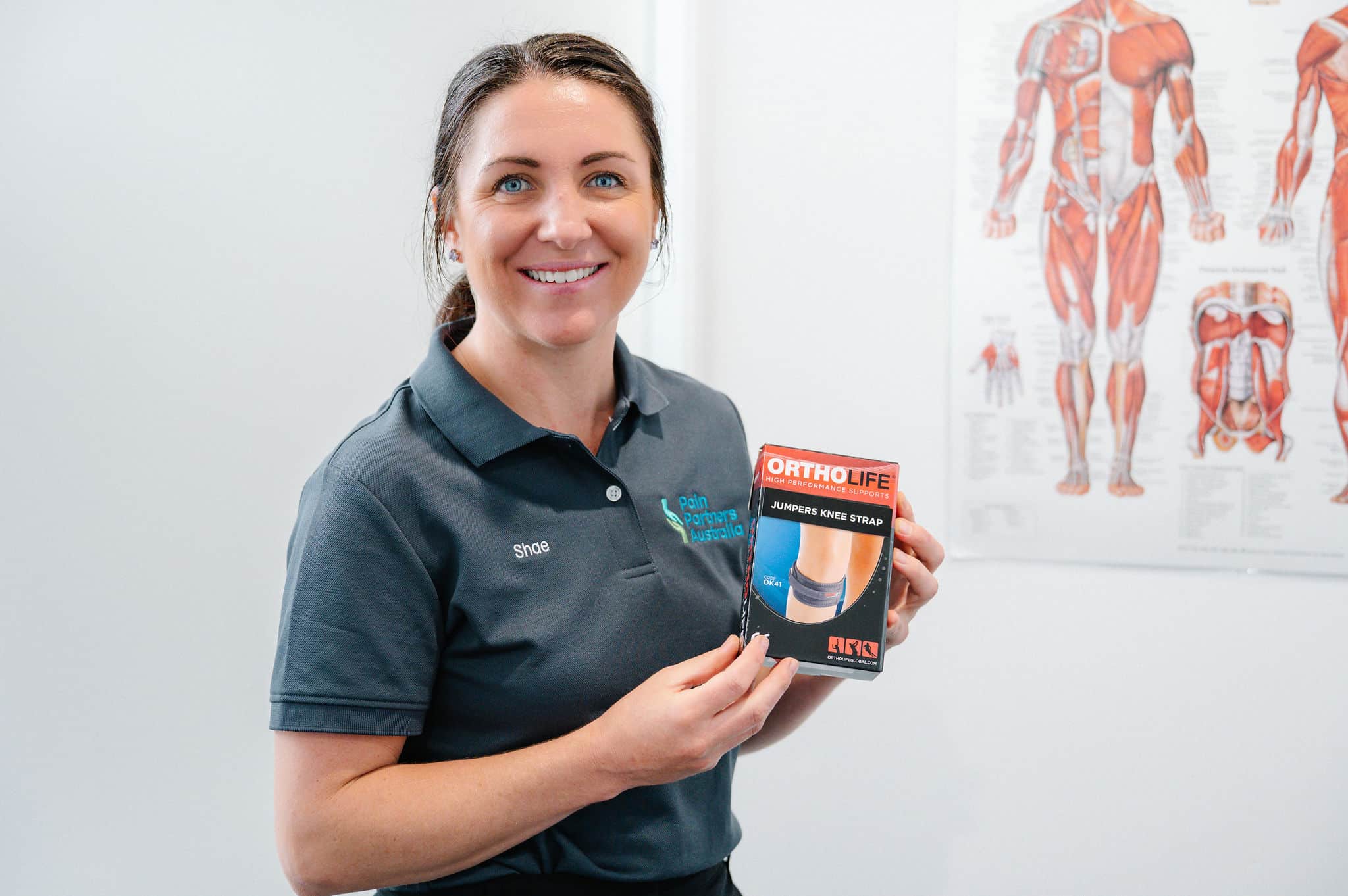
- Patellar Tendon Straps: These straps, available through Pain Partners Australia and endorsed by physiotherapists, can be worn during activities to help reduce the strain on the patellar tendon and alleviate pain associated with jumper’s knee.
Disclaimer: This information is for general guidance only and should not replace the advice of a qualified physiotherapist or healthcare professional. Proper assessment and individualized treatment are crucial for managing jumper’s knee.
References
Malliaras, P., Cook, J., Purdam, C., & Rio, E. (2015). Patellar Tendinopathy: Clinical Diagnosis, Load Management, and Advice for Challenging Case Presentations. Journal of Orthopaedic & Sports Physical Therapy, 45(11), 887–898.
Brace
Patella tendon strap – $52