Osgood-Schlatter Disease is a common cause of knee pain in growing adolescents, typically affecting those between the ages of 10-13 in girls and 12-15 in boys. These age ranges correspond to the periods of rapid growth spurts during puberty when bones, muscles, and tendons may grow at different rates. While it can affect both genders, Osgood-Schlatter Disease has historically been reported as being more common in boys, although this gap may be narrowing as more girls participate in sports.
It involves irritation and inflammation at the tibial tuberosity – the bony bump located just below the kneecap where the strong patellar tendon (which connects the kneecap to the shin bone) attaches.
During growth spurts, bones, muscles, and tendons grow at different rates. In physically active adolescents, repetitive stress from activities like running, jumping, and sports can put significant traction on the patellar tendon at its attachment point on the tibial tuberosity. This repeated stress can lead to small avulsion fractures (where the tendon pulls away tiny pieces of bone), causing pain, swelling, and tenderness.
- Pain and tenderness directly at the bony bump below the kneecap (tibial tuberosity).
- Swelling around the tibial tuberosity, which may appear more prominent.
- Pain that worsens with physical activity, especially running, jumping, squatting, kneeling, and activities involving forceful quadriceps contraction.
- Pain that often improves with rest.
- Tightness in the quadriceps (front thigh muscles) and hamstring muscles.
- In some cases, the bony bump may become permanently larger, even after the pain subsides.
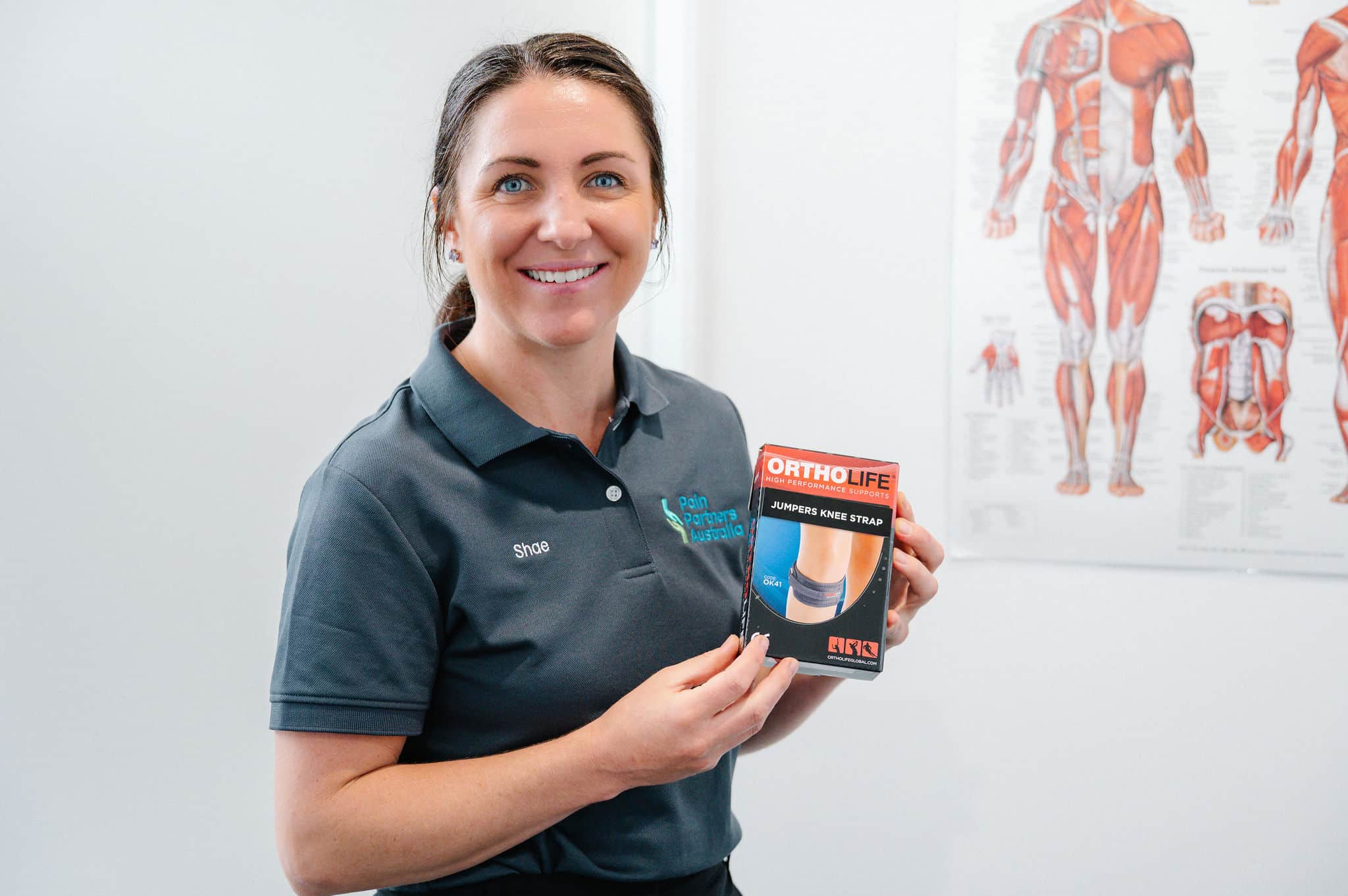
- Patellar Tendon Straps: These straps, available through Pain Partners Australia and endorsed by physiotherapists, can be worn during activities to help reduce the strain on the tibial tuberosity and alleviate pain associated with Osgood-Schlatter Disease.
- Listen to Your Body: Pain is your guide. Avoid activities that cause significant pain.
- Gradual Return to Activity: As pain subsides, gradually increase activity levels. A sudden return to intense activity can re-aggravate the condition.
- Time for Healing: Osgood-Schlatter Disease typically resolves as the adolescent finishes growing and the growth plates in the tibial tuberosity fuse. This can take several months to a couple of years. Management focuses on symptom control during this time.
- Consult a Healthcare Professional: If pain is severe, persistent, or interferes significantly with daily activities, it’s important to consult a doctor or physiotherapist for a proper diagnosis and personalized management plan.
Disclaimer: This information is for general guidance only and should not replace the advice of a qualified physiotherapist or healthcare professional. Proper assessment and individualized management are crucial for Osgood-Schlatter Disease.