- Location: Pain on the outside of the elbow, sometimes radiating into the forearm and wrist.
- Cause: Typically due to overuse of the forearm muscles that extend (bend back) your wrist and fingers.
- Common Activities: Not just tennis! It’s common in painting, plumbing, carpentry, typing, extensive computer mouse use, or any activity involving repetitive gripping, pushing, or backhand movements.
- Location: Pain on the inside of the elbow, often radiating down the forearm towards the wrist.
- Cause: Typically due to overuse of the forearm muscles that flex (bend forward) your wrist and fingers, or pronate (turn down) your forearm.
- Common Activities: Golfing, bowling, pitching, weightlifting, but also painting, carpentry, gardening, or using tools that involve repetitive gripping or throwing motions.
- Pain or burning sensation.
- Weak grip strength.
- Tenderness to touch around the affected bony prominence.
- Sharp pain worsening with specific movements (e.g., shaking hands, lifting objects, turning a doorknob).
Finding ways to reduce the strain and support the healing process for these irritated tendons is key to finding relief and resuming your activities.
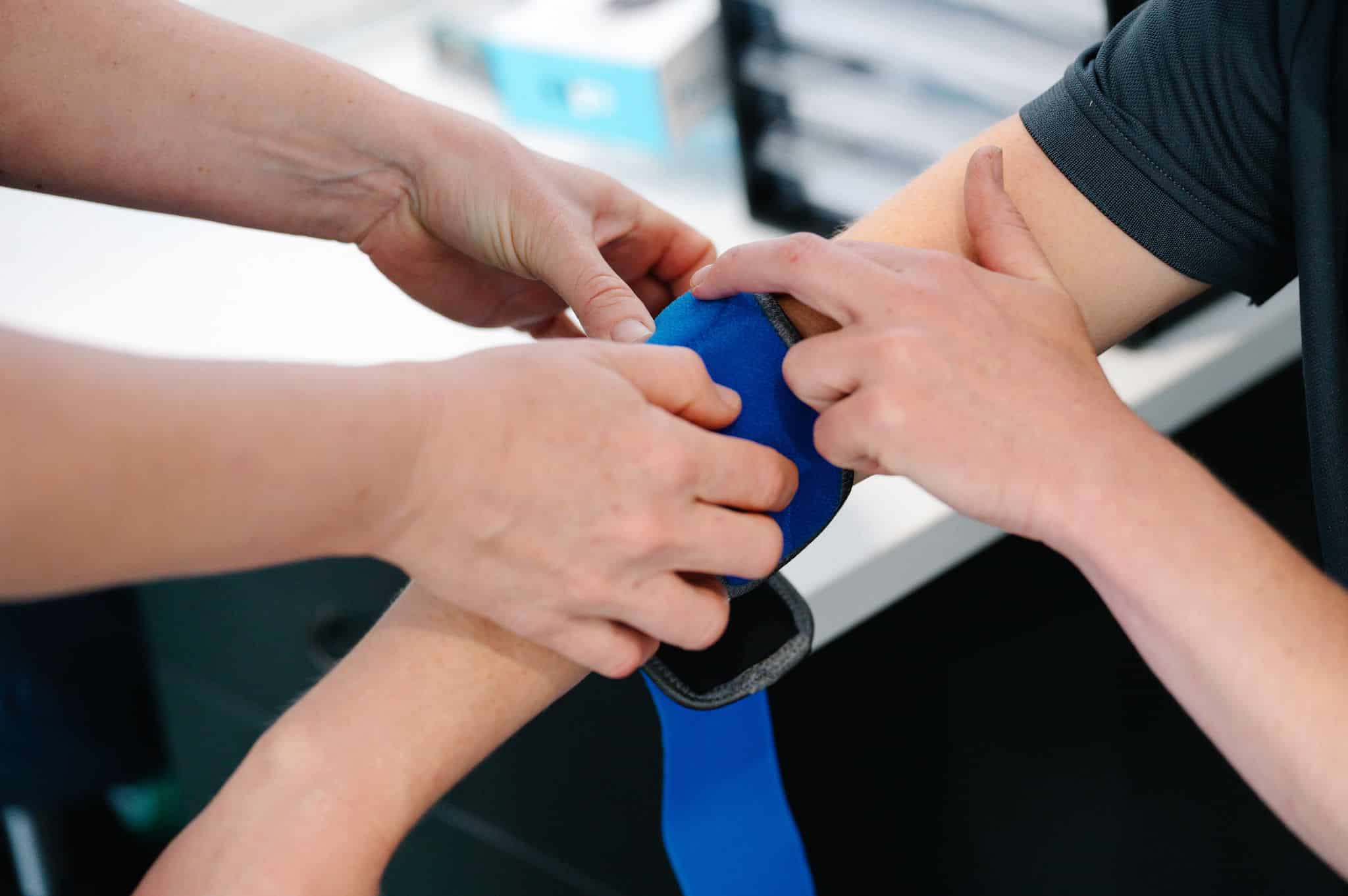
Our physiotherapy-endorsed elbow support is specifically designed to provide targeted relief and support for Tennis and Golfer’s Elbow, complementing your recovery journey. This brace works by offering several key benefits:
- Targeted Pain Relief: Our brace offloads stress from the inflamed tendon, effectively reducing pain and allowing the tendon to rest and heal.
- Reduced Muscle Strain: The brace’s compression absorbs and dissipates forces traveling up the forearm, reducing vibration and tugging on the irritated tendon for immediate comfort.
- Enhanced Comfort During Activity: By reducing pain and providing support, our braces let you continue daily tasks, work, or recreational activities with greater comfort, preventing constant elbow aggravation.
- Gentle Compression for Healing: Overall compression helps manage subtle swelling and promotes circulation, supporting the natural healing of affected tendons.
- Proprioceptive Feedback: A brace offers a gentle sensory reminder for mindful arm movements, helping prevent over-stressing and encouraging healthier patterns.
- Protection During Repetitive Tasks: For work or hobbies with repetitive arm movements, a brace provides consistent support and a protective barrier, reducing cumulative strain on the elbow.
Don’t let elbow pain dictate your life or stop you from your favourite activities. Providing your elbow with the right external support can be a powerful tool in managing symptoms, promoting healing, and regaining your comfort and function.
Ready to find the relief and support your elbow deserves? Explore our range of physiotherapy-endorsed elbow supports today and take a step towards a more comfortable and active you.
Ultimate Performance Tennis Elbow Support – $35
- AliMed. (n.d.). Elbow Braces for Tendonitis: What You Need to Know. Retrieved June 8, 2025, from https://www.alimed.com/blogs/splints-and-braces/elbow-braces-for-tendonitis-what-you-need-to-know
- Bisset, L., & Vicenzino, B. (2015). Physiotherapy management of lateral epicondylalgia. Journal of Physiotherapy, 61(4), 174–181. https://doi.org/10.1016/j.jphys.2015.07.017
- Cleveland Clinic. (n.d.). How to Choose a Golfer’s Elbow Brace. Retrieved June 8, 2025, from https://health.clevelandclinic.org/golfers-elbow-brace
- Orthopedic Institute of NJ. (n.d.). How To Treat Elbow Tendonitis and Tennis Elbow Pain. Retrieved June 8, 2025, from https://orthopedicnj.com/news/how-to-treat-elbow-tendonitis
- Physioworks. (n.d.). Tennis Elbow Brace Benefits – Physiotherapist’s Advice. Retrieved June 8, 2025, from https://physioworks.com.au/faq/tennis-elbow-brace-guide/
- Sports Injury Physio. (n.d.). Best braces for tennis elbow pain. Retrieved June 8, 2025, from https://www.sports-injury-physio.com/post/best-braces-for-tennis-elbow
- The Immediate Effects of Orthoses on Pain in People with Lateral Epicondylalgia. (2013). BioMed Research International, 2013, Article ID 385450. https://doi.org/10.1155/2013/385450